If you have ever driven through Baldwin Hills or View Park-Windsor Hills and thought, "Why do the homes feel so distinctive here?" you are noticing something real. These neighborhoods were not built all at once or around a single look, so the streetscape reflects decades of design choices shaped by hillsides, views, and changing housing trends. If you are buying, selling, or simply getting to know the area better, understanding the architecture can help you read a property more clearly. Let’s dive in.
How the neighborhoods developed
Baldwin Hills and View Park-Windsor Hills are best understood as layered residential areas rather than one-style subdivisions. According to the View Park National Register documentation, View Park developed from the 1920s through the 1960s and includes 1,752 single-family homes that range from prewar Period Revival designs to postwar Ranch houses.
That same documentation highlights several features that still shape how the neighborhoods feel today: curving streets, underground utilities, consistent setbacks, broad lawns, and very few perimeter fences. Together, those elements create the park-like setting many buyers notice right away.
Windsor Hills developed later, largely in the late 1930s. Los Angeles County context materials note that Windsor Hills was built by Marlow-Burns & Company and featured Spanish Colonial Revival, Mediterranean Revival, and Minimal Traditional homes, with hundreds of houses completed in just a few years.
In Baldwin Hills proper, one of the most important architectural landmarks is Village Green, a 1940s National Historic Landmark. Its 629 units on 68 acres show a different side of the neighborhood’s architectural story, with modern garden-apartment planning organized around shared open space, light, and ventilation.
Spanish and Mediterranean styles
If you picture the classic prewar home in these neighborhoods, you are probably thinking of Spanish Colonial Revival or Mediterranean Revival. These styles are among the most visible in the area and are known for smooth stucco walls, red clay tile roofs, arched openings, wrought-iron details, and layouts that often connect to patios or courtyards.
In practical terms, these homes tend to have a strong sense of arrival. You may see an arched entry, a front path that builds anticipation, or a courtyard that creates privacy while still bringing in light and air.
Local preservation guidance also points to details like hand-troweled stucco, red tile coping, and tile roof elements as defining features of these homes. In View Park, these houses appear alongside other Period Revival types, including Tudor, French, and Colonial Revival forms, which adds variety to the streetscape without losing cohesion.
What to notice from the street
When you are touring a Spanish or Mediterranean-style home in Baldwin Hills or View Park-Windsor Hills, watch for these visual cues:
- Smooth stucco exterior walls
- Red tile rooflines
- Arched windows or doorways
- Wrought-iron accents
- Courtyard or patio-centered planning
- A footprint that adapts to the lot, especially on slopes
On hillside sites, these homes may feel less boxy and more responsive to the land. Some floor plans bend with the lot or orient key rooms toward views and outdoor space.
Ranch and Minimal Traditional homes
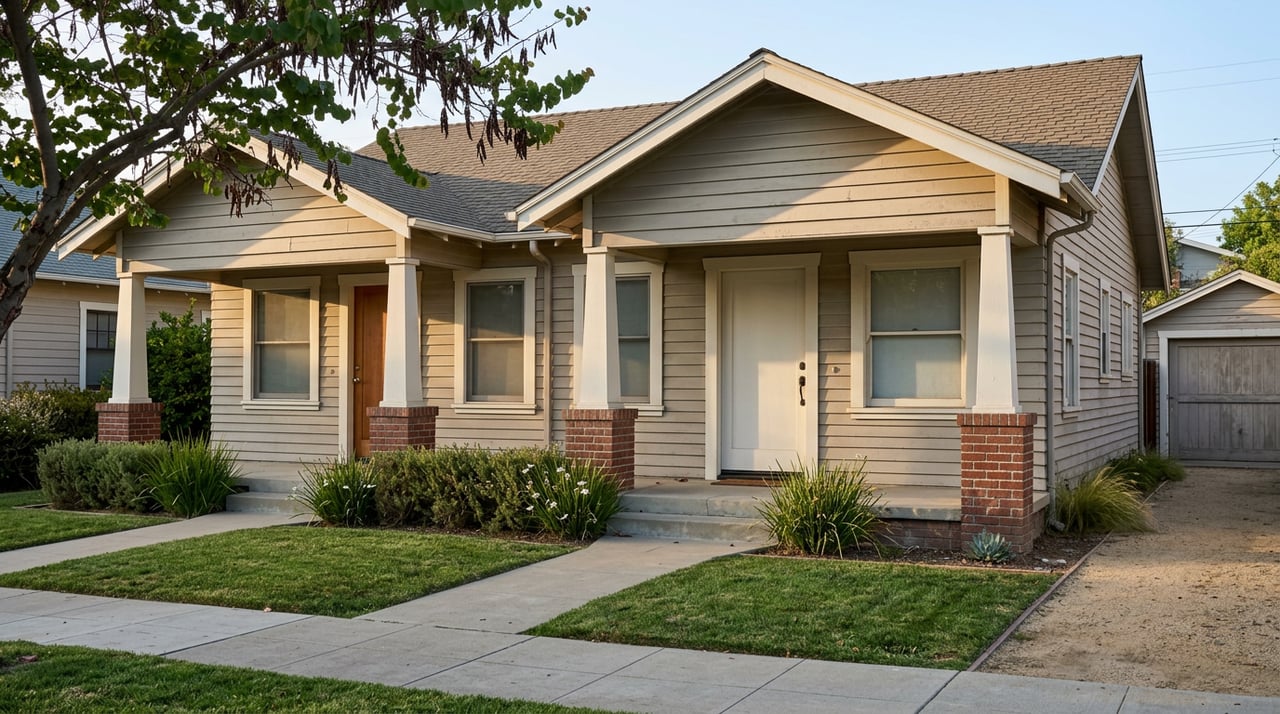
As the neighborhoods expanded after the prewar period, Ranch and Minimal Traditional homes became a major part of the housing mix. In Windsor Hills, county materials describe many houses as stripped-down Minimal Traditional forms, while View Park’s later development includes multiple Ranch variations.
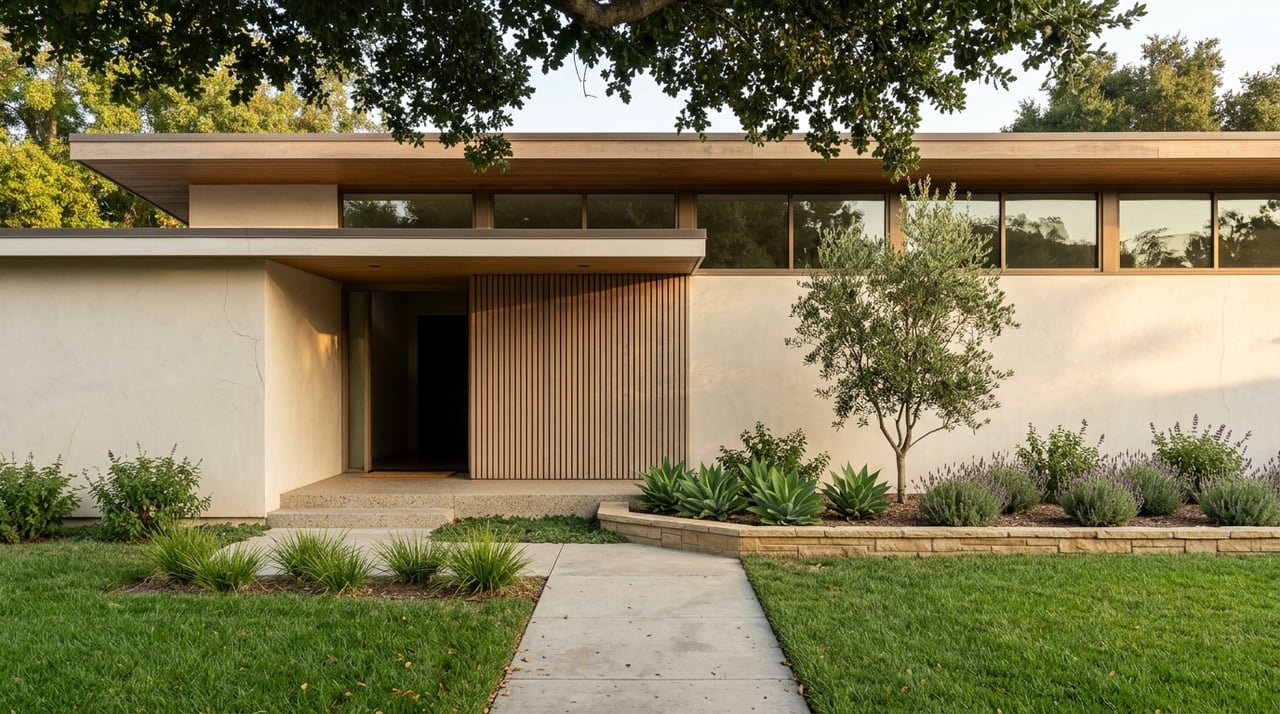
The National Park Service description of Ranch houses gives you a helpful checklist: long, shallow one-story forms, low-pitched roofs, deep eaves, rectangular or L-shaped plans, patios, attached garages or carports, and large expanses of glass.
These homes often feel more informal than earlier revival styles. Instead of emphasizing ornament, they emphasize easy flow, natural light, and practical everyday living.
Why Ranch homes feel spacious
One reason buyers respond well to Ranch homes is the layout. Typical interiors often revolve around an open living and dining area with an eat-in kitchen nearby, which creates a sense of openness even when the square footage is relatively modest.
From the street, Ranch homes are often the easiest to identify. Look for a broad footprint, a low roofline, an attached garage or carport, and a stronger connection to the backyard through patios or large windows.
Minimal Traditional in context
Minimal Traditional homes tend to read as simpler and more compact than full Ranch houses. In neighborhoods like Windsor Hills, they are part of the area’s FHA-era development pattern and reflect a more streamlined approach to homebuilding in the late 1930s and early 1940s.
That simplicity is part of their appeal. These homes can offer clean rooflines, efficient layouts, and a classic residential look that fits naturally into the broader architectural mix.
Mid-century modern in Baldwin Hills
Mid-century modern architecture is not the dominant style across every block, but it is an important part of the area’s identity. Later View Park homes and major landmarks such as Village Green show how modern design took root in the neighborhood.
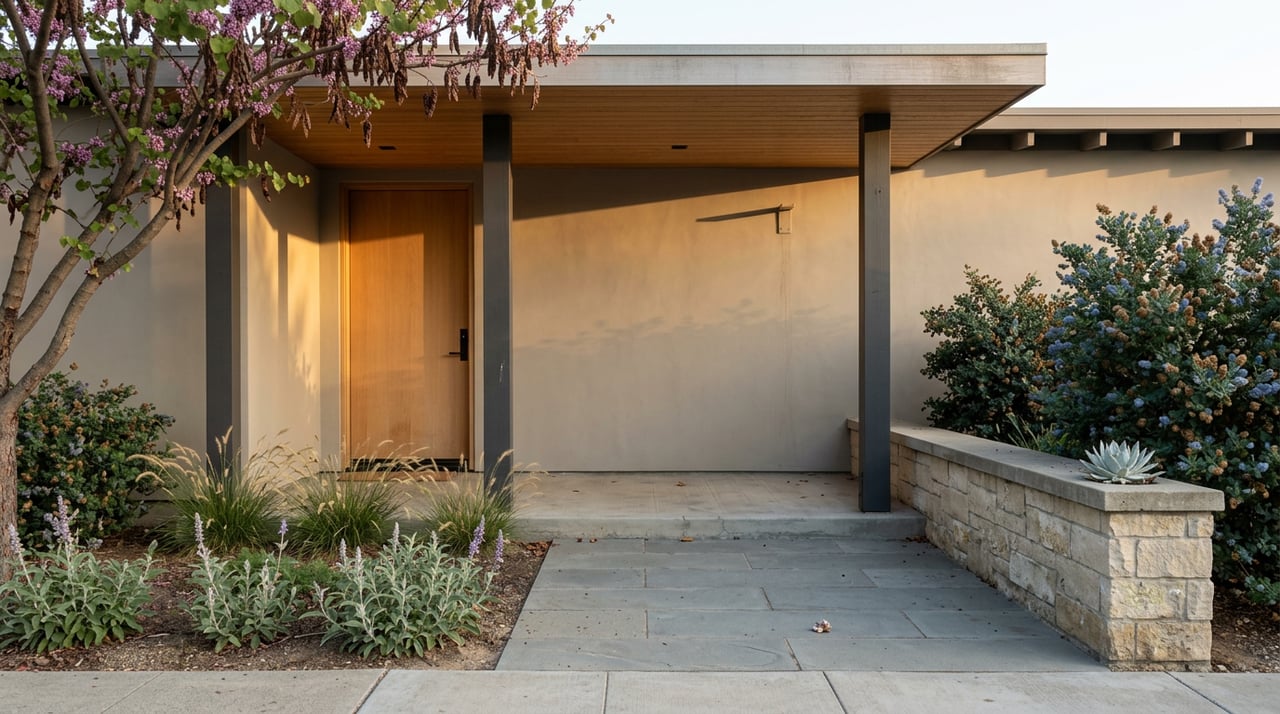
The National Park Service guidance on modern architecture emphasizes long, low forms, minimal ornament, and generous use of glass and steel. Los Angeles examples highlighted by the LA Conservancy add familiar traits such as post-and-beam construction, flat roofs, split-level or low one-story plans, and open interiors that extend toward patios or decks.
In hillside neighborhoods, that design logic often feels especially natural. Homes may be oriented toward light, air, and views, with terraces or large windows doing a lot of the architectural work.
Village Green’s role
Village Green is a useful reminder that Baldwin Hills architecture is not only about detached single-family homes. The complex is organized around central greens, with many units including patios or balconies, so the relationship between buildings and landscape becomes the defining feature.
For anyone trying to understand Baldwin Hills architecture, Village Green shows how modern planning in this area valued shared open space just as much as the buildings themselves.
Why the streets feel cohesive
Even with several styles in the mix, Baldwin Hills and View Park-Windsor Hills often feel visually unified. Part of that comes from the original planning. Curving streets, broad setbacks, mature landscaping, and a consistent relationship between homes and the lot all help tie different architectural styles together.
It also helps to think of the area as an architectural continuum. Early Period Revival homes, later Ranch houses, Minimal Traditional designs, and pockets of Mid-Century Modern do not feel random here. They reflect the neighborhoods’ steady growth over several decades.
For buyers, that means a home’s style is only part of the story. The setting, siting, and integrity of the original design often matter just as much.
What style means for buyers and sellers
Architecture matters because it affects how a home looks, lives, and holds up over time. Preservation sources for View Park and Village Green emphasize the importance of original design, workmanship, and site planning, which suggests that intact windows, rooflines, massing, and the relationship between house and lot can be just as meaningful as square footage.
For buyers, this can shape how you compare homes. Two properties with similar size may feel very different if one has a well-preserved courtyard layout, original roofline, or stronger indoor-outdoor connection.
For sellers, understanding the architectural language of your home can help you position it more effectively. A buyer looking at a Spanish Revival home is often responding to different features than someone drawn to a postwar Ranch or a mid-century property.
Maintenance by architectural style
Each style tends to bring its own maintenance priorities. Knowing those basics can help you evaluate a property more confidently or prepare a home for sale with a clearer strategy.
Spanish and Mediterranean upkeep
Spanish Revival and Mediterranean homes usually require attention to:
- Stucco condition and compatible repair methods
- Tile roof materials and related details
- Ironwork maintenance
- Wood trim and exterior finishes
The National Park Service stucco preservation guidance notes that stucco repairs should be compatible with the historic material. In other words, repairs are not just about patching a surface. They should also respect how the home was originally built.
Ranch and mid-century upkeep
Ranch and Mid-Century Modern homes often shift the focus toward:
- Roof systems, especially low-slope or low-pitched roofs
- Window condition and glazing performance
- Larger openings and indoor-outdoor transition areas
- Drainage and site conditions on sloped lots
Because these homes rely more on glass, broad rooflines, and open connections to patios or yards, deferred maintenance can affect both function and appearance quickly.
How to read a home before you buy
If you are shopping in Baldwin Hills or View Park-Windsor Hills, it helps to look beyond surface charm and ask a few style-specific questions:
- Does the house still reflect its original roofline and massing?
- Have key details like windows, stucco, tile, or ironwork been maintained?
- How does the floor plan connect to the yard, patio, or view?
- Does the home sit naturally on the lot, especially on a hillside site?
- Are there signs that drainage or retaining features may need attention?
These questions can help you compare homes more thoughtfully. They also give you a better sense of what kind of upkeep and long-term value factors may come with a property.
Why local architectural context matters
In neighborhoods with this much character, context matters. A home is not just a standalone structure. It is part of a larger pattern of planning, design, and neighborhood identity.
That is one reason local guidance can be so valuable when you are buying or selling here. Understanding whether a home fits into a prewar Period Revival layer, a postwar Ranch phase, or a modern design tradition can sharpen pricing strategy, marketing, and buyer expectations.
If you are thinking about buying or selling in Baldwin Hills or View Park-Windsor Hills, Keyholder Estates can help you understand how architectural style, neighborhood context, and property condition come together in the real world.
FAQs
What architectural styles are most common in Baldwin Hills and View Park-Windsor Hills?
- The most visible styles are Spanish Colonial Revival, Mediterranean Revival, Ranch, Minimal Traditional, and Mid-Century Modern, with some additional Period Revival variations in View Park.
How can you identify a Spanish Revival home in Baldwin Hills or View Park-Windsor Hills?
- Look for smooth stucco walls, red tile roofs, arched openings, wrought-iron details, and patio or courtyard-oriented layouts.
What defines a Ranch home in View Park-Windsor Hills?
- Ranch homes are usually long, low, one-story houses with low-pitched roofs, broad footprints, attached garages or carports, large windows, and an easy connection to outdoor space.
Why is Village Green important to Baldwin Hills architecture?
- Village Green is a National Historic Landmark that represents the area’s modern architectural legacy through garden-apartment design centered on shared greens, light, ventilation, and landscaped open space.
Why does architectural style matter when buying a home in Baldwin Hills or View Park-Windsor Hills?
- Style can affect layout, maintenance needs, design integrity, and how a home relates to its lot and setting, all of which can shape how a property feels and how you evaluate it.
What maintenance issues should you watch for in older Baldwin Hills and View Park-Windsor Hills homes?
- Common areas to review include stucco, tile roofs, windows, roof systems, drainage, and hillside-related site features such as retaining elements.